
Seven modules. Platform agnostic. Source-available. No vendor lock-in.
Each module works on its own and connects to whatever you already run.
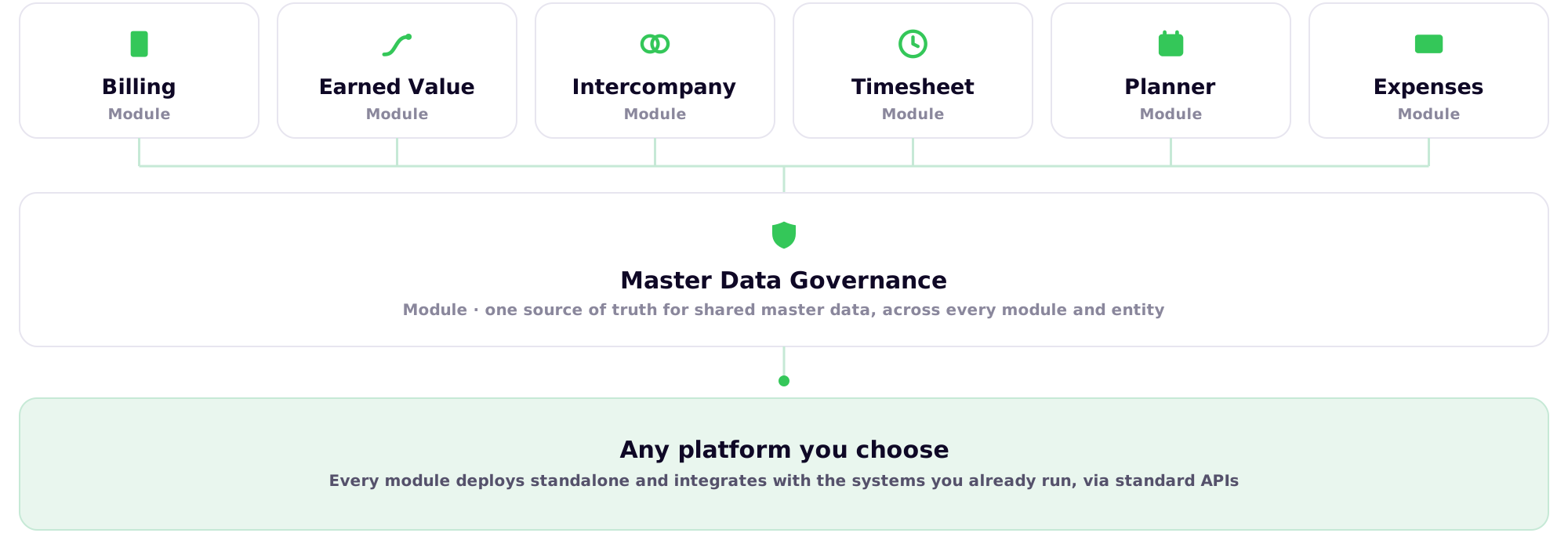
The modules
Seven modules, one data model. Start where it hurts, usually Timesheet and Billing, or Master Data Governance if that's the problem you came with. Add the rest as the business asks. Intercompany arrives with your second entity.

Billing
From hours to invoice. The entry module: this is what almost everyone wants first.

Earned Value
Forecasting and margin insight. The logical upsell on Billing and Timesheet.

Intercompany
Transactions and resources between entities. A heavyweight, on par with Earned Value.

Timesheet
Time registration that flows straight through into invoicing and settlement, across years of hours on a single project.

Planner
Capacity and resource scheduling for projects measured in years. It follows on from Earned Value.

Expenses
Expense claims tied to projects and entities.

Master Data Governance
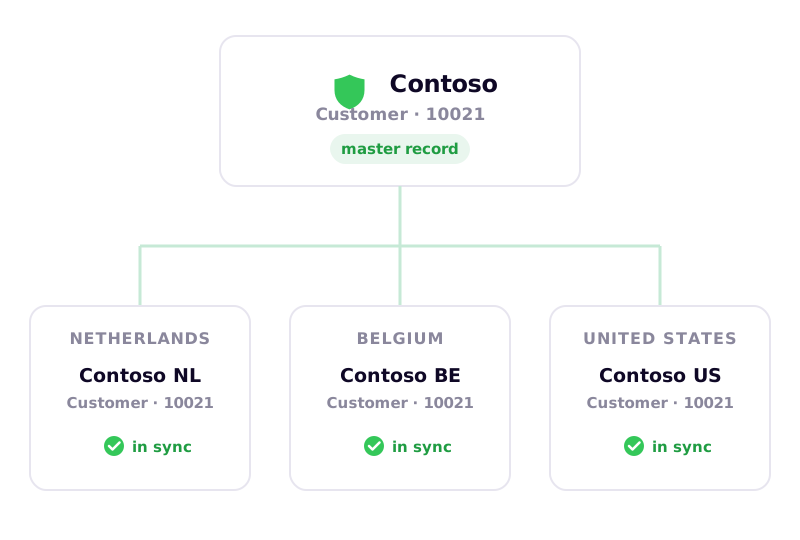
One set of customers, vendors and items for every entity. Maintain centrally, distribute automatically.
Start where it hurts. Most begin with Timesheet and Billing, add Earned Value, then Planner and Expenses. Intercompany and Master Data Governance come into view once there are multiple entities.
One source of truth, underneath everything.
Master Data Governance keeps shared master data (customers, vendors, items) identical across every module and entity. Change it once, it's right everywhere.
It's the layer the other six sit on. And it's a real entry point: companies that hit the limits of standard master data management start here and grow into the rest of the suite.
Any platform you choose
Every module deploys standalone and integrates with the systems you already run, via standard APIs.
Microsoft Dynamics 365 Business Central
Where our expertise runs deepest. The modules connect natively and run inside your own environment.
Any platform
The API layer connects to everything else. There is no vendor lock-in, and your requirements decide the stack.
Start small and scale when it works.
Deploy it and run it, then scale when it earns the room. You see the fit before you commit.